Written Component
This video essay is a reflection on the development of my Unit 2 practice — specifically the two web-based systems I built, Graphic Maze and Dot_t. — and the shift in thinking that happened between them. It is not a finished argument. It is a record of where my thinking has arrived, halfway through.
I began Unit 2 with a single question:
When the designer relinquishes direct control over the visual outcome — and designs rules and structures instead — can graphics produce meaning through the behaviour of participants?
This question comes from my observation of my own design practice. Designers spend enormous amounts of time getting the position of a single shape, or the spacing of a single typeface, exactly right. I do not want to challenge that precision — but I want to test what happens if it is no longer used to determine the image itself, and is used instead to determine the rules that produce the image.
Can graphics still be produced? And where does meaning emerge?
I built two web-based systems. Both treat behaviour as the medium through which graphics are made. Both refuse to let me draw the final image. But they answer the question from opposite sides.
Graphic Maze translates one player’s judgement into one image. The participant is alone. The graphic is theirs.
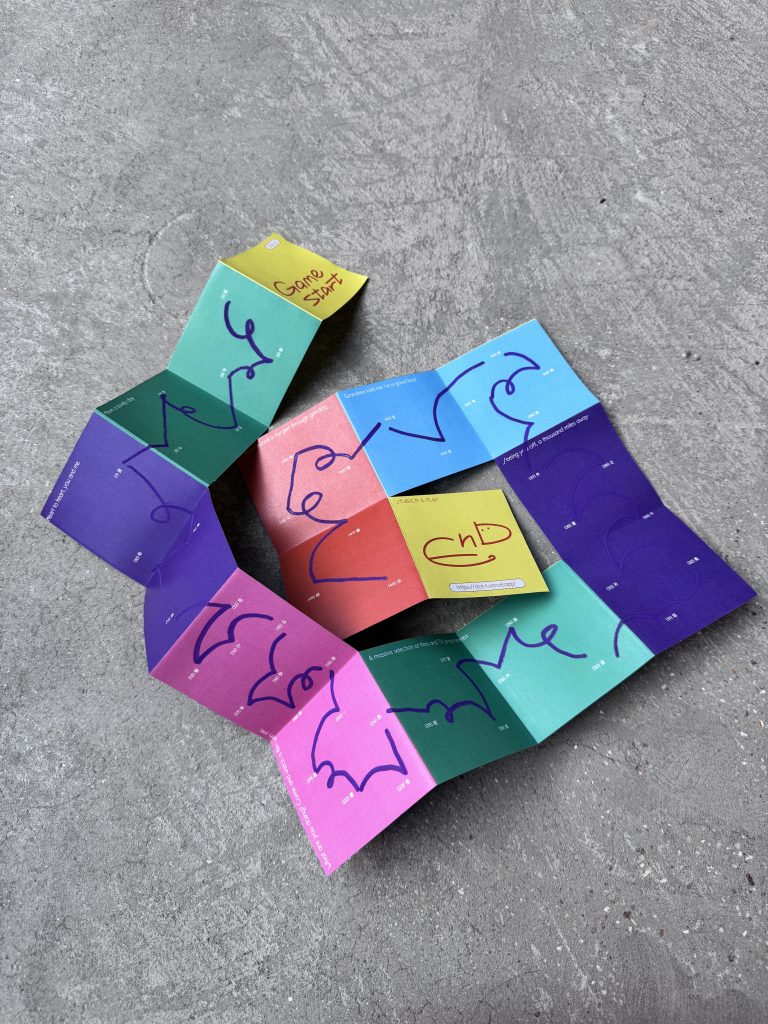
Dot_t. is a shared canvas. One participant’s last word becomes another’s first; one participant’s last line becomes another’s first stroke. The image is made between people.
The two systems share a proposition — behaviour can produce graphics — but diverge on a deeper question: where does that production happen?
What happens when you use a purposeful structure to produce purposeless results?
The structures are designed around purpose — rules of a maze, rules of chaining, constraints on a card. The outcomes, by design, are not.
Graphic Maze is a 10×10 maze. A player walks it with the four arrow keys. As they walk, a graphic on the right shifts.
↑ stretch all shapes vertically by 15%
↓ compress all shapes horizontally by 15%
← split one shape at random
→ rotate the entire composition by 15° clockwise
Each key holds one rule. One operation.
The participant has two layers of agency. First, the choice of path — every turn is a graphic decision in disguise. Second, the participant can redefine the rules themselves. The mapping above is the default; the player can rewrite it. They can decide ↑ now changes the colour, → now duplicates the largest shape.
When the player reaches the end, the image generated by that walk is saved. It cannot be predicted from the rules, nor from any single decision along the way. It is the accumulated residue of every choice the participant made. The maze has the shape of a question with a right answer. The graphic does not. Every walk produces a different image. None is more correct than another.
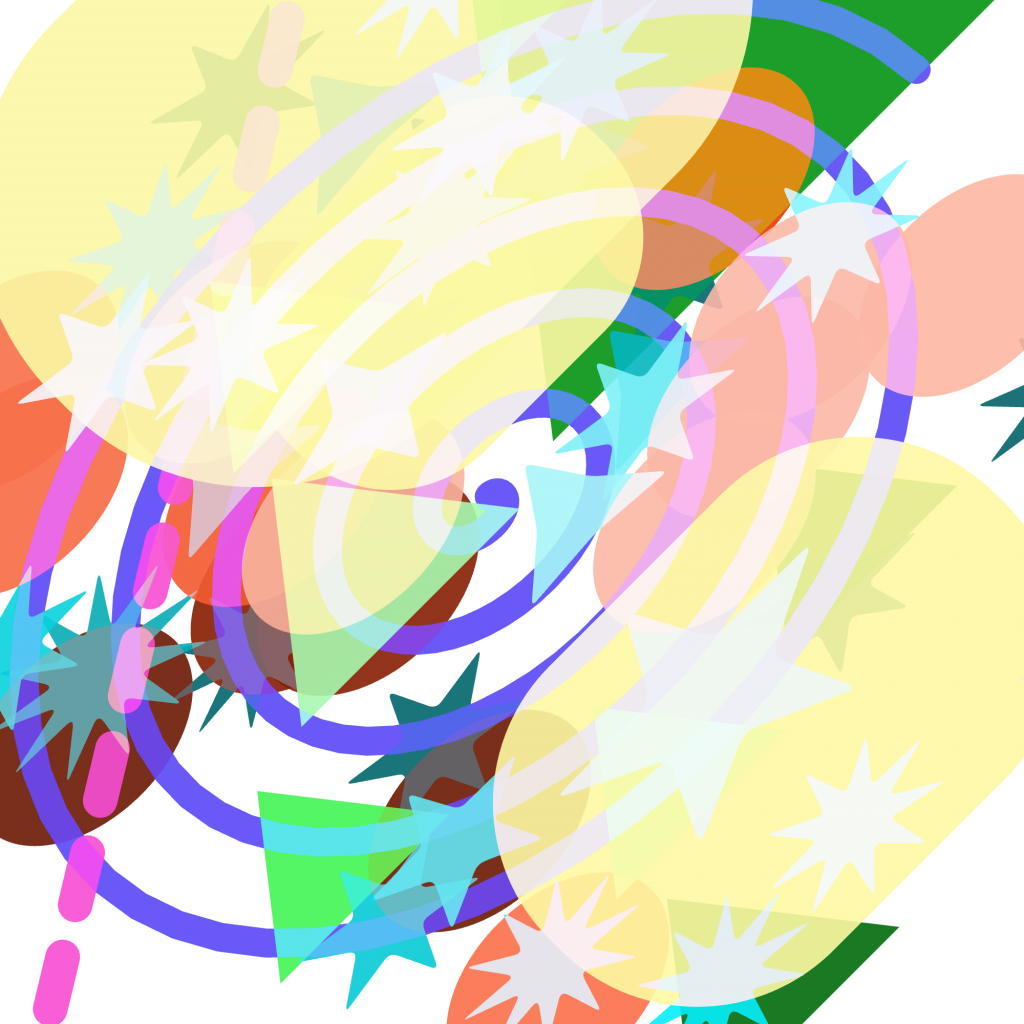
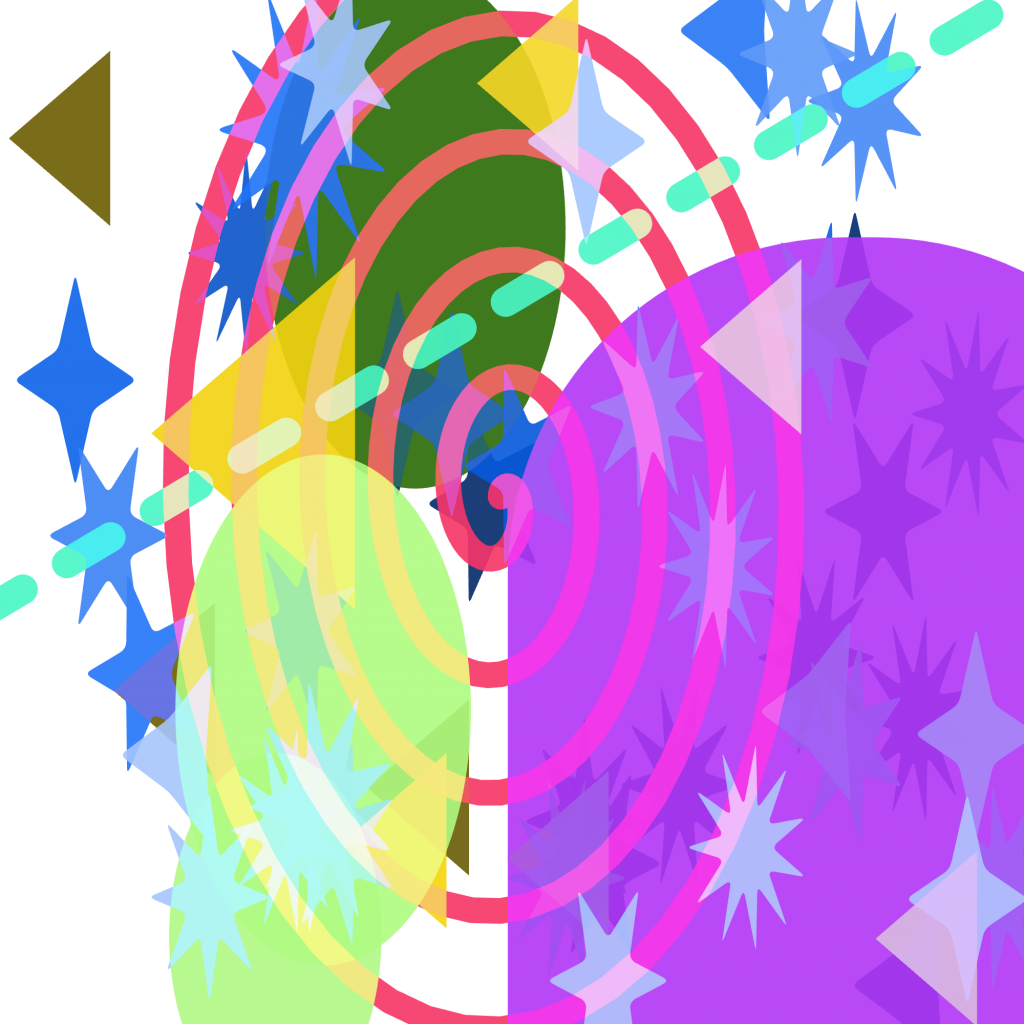
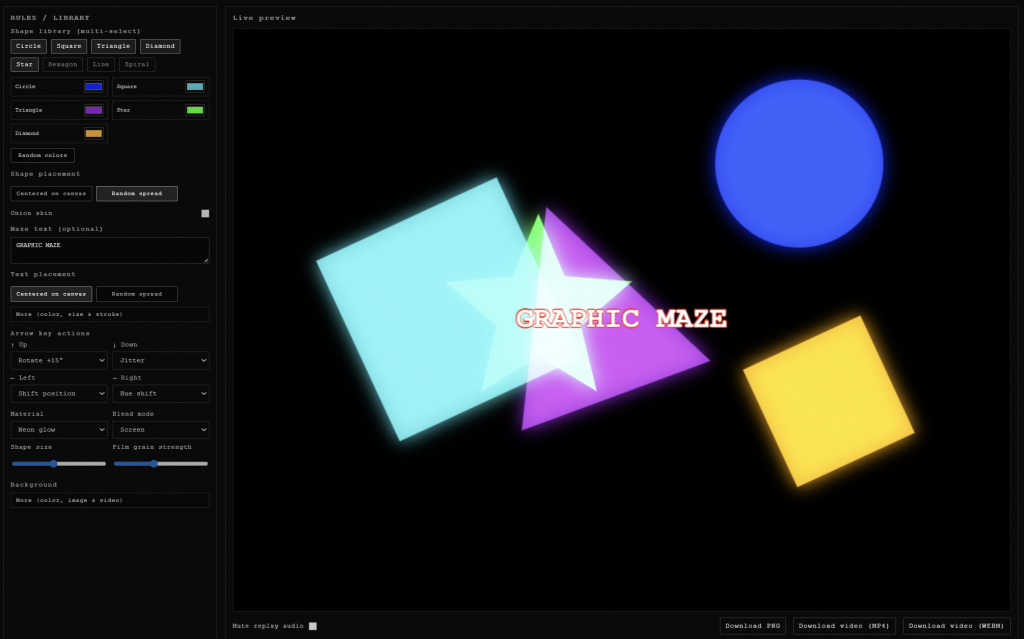
Two references shaped Graphic Maze.
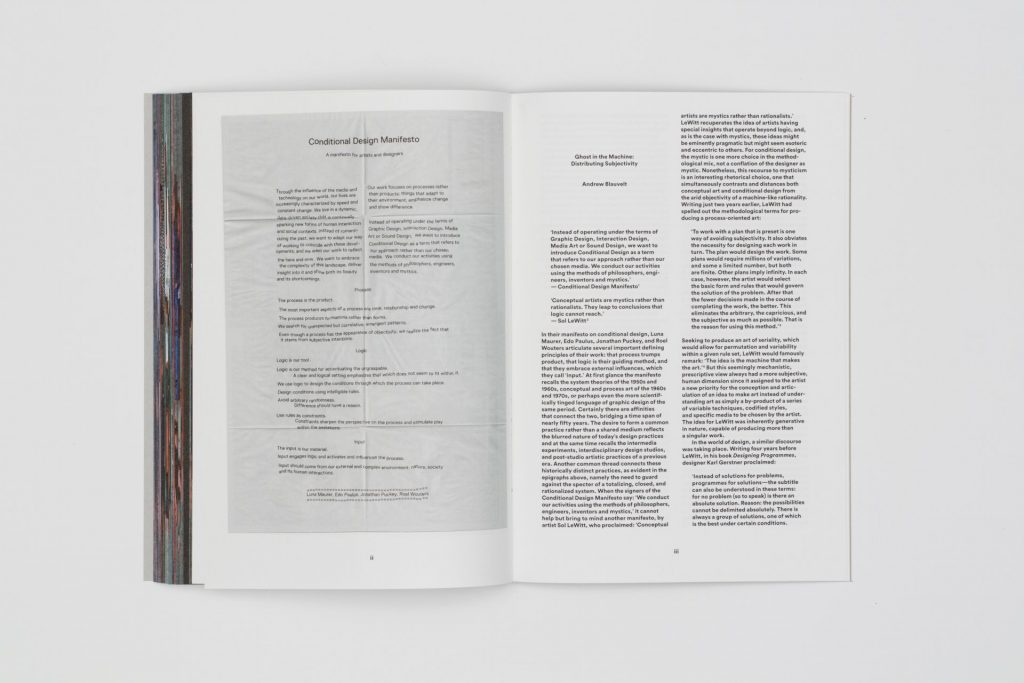
The Conditional Design Workbook (Blauvelt et al., 2013) is a manifesto for a movement initiated in Amsterdam in 2008 by Luna Maurer, Edo Paulus, Jonathan Puckey and Roel Wouters. Its central claim is that the process is the product — when a designer’s decisions are encoded as rules, the rules become the work, and the image is the evidence of those rules in action.
The line that shaped me most: “the designer’s responsibility doesn’t vanish when control is relinquished — it moves into the precision of the rule” (Blauvelt et al., 2013). This reframed what I was doing. Graphic Maze is not an abdication of responsibility. It is a relocation. The precision I would normally apply to the position of a shape is now applied to the rule that produces the transformation — the 15%, the bounded randomness of the split, the direction of the rotation. Each of these is a decision I can name.
Sol LeWitt’s Paragraphs on Conceptual Art (LeWitt, 1967) provides the lineage. Working in late-1960s New York, LeWitt separated the idea of an artwork from its execution, arguing the idea is the artwork and the execution can be delegated. His most quoted line: “the idea becomes a machine that makes the art” (LeWitt, 1967, p. 80).
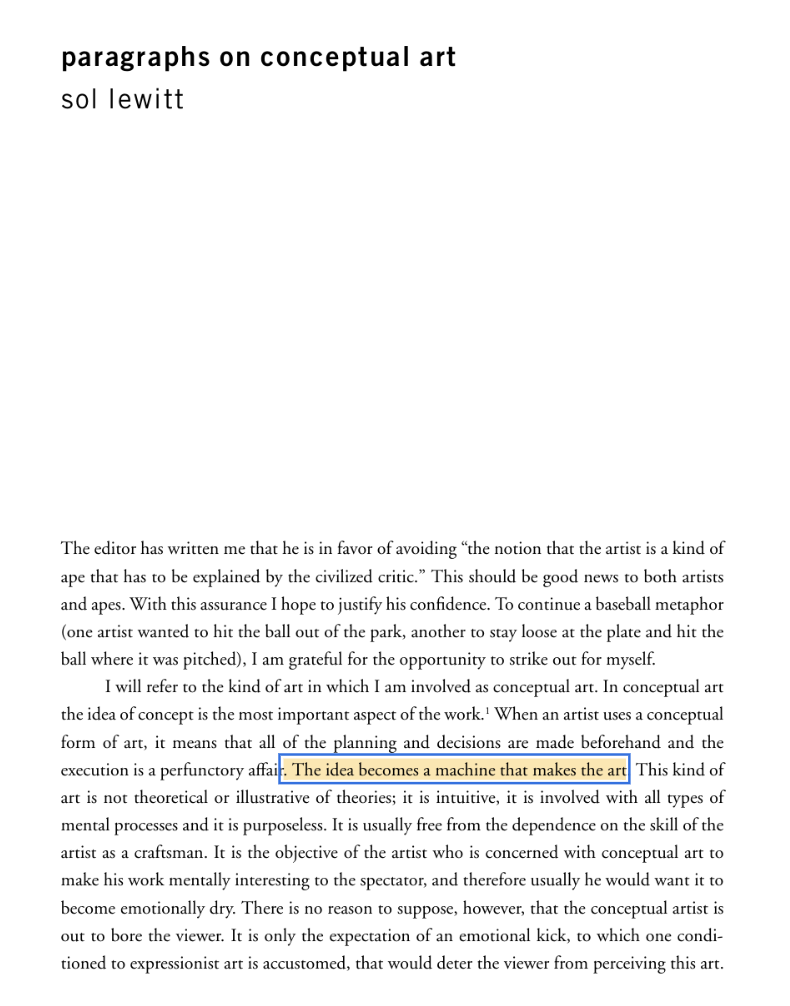
The maze is that machine. The player walks through it. The image is what the walking leaves behind.
Graphic Maze showed me that one body’s behaviour can be translated into an image. Every player’s path is singular. Each session produces a graphic no other session could produce.
But Graphic Maze operates one participant at a time. Each session is closed. Participants do not see each other; they cannot respond to each other. This is the limit of the aggregate model — many participants, many graphics, sitting in parallel.
A different question began to form:
What if behaviour is not just translated, but passed? What if one person’s last gesture becomes another person’s first?
Then the line is no longer a single path through a system. It becomes a chain of responses across people.
Two web-based works helped me think through what a system of responses between participants might look like.
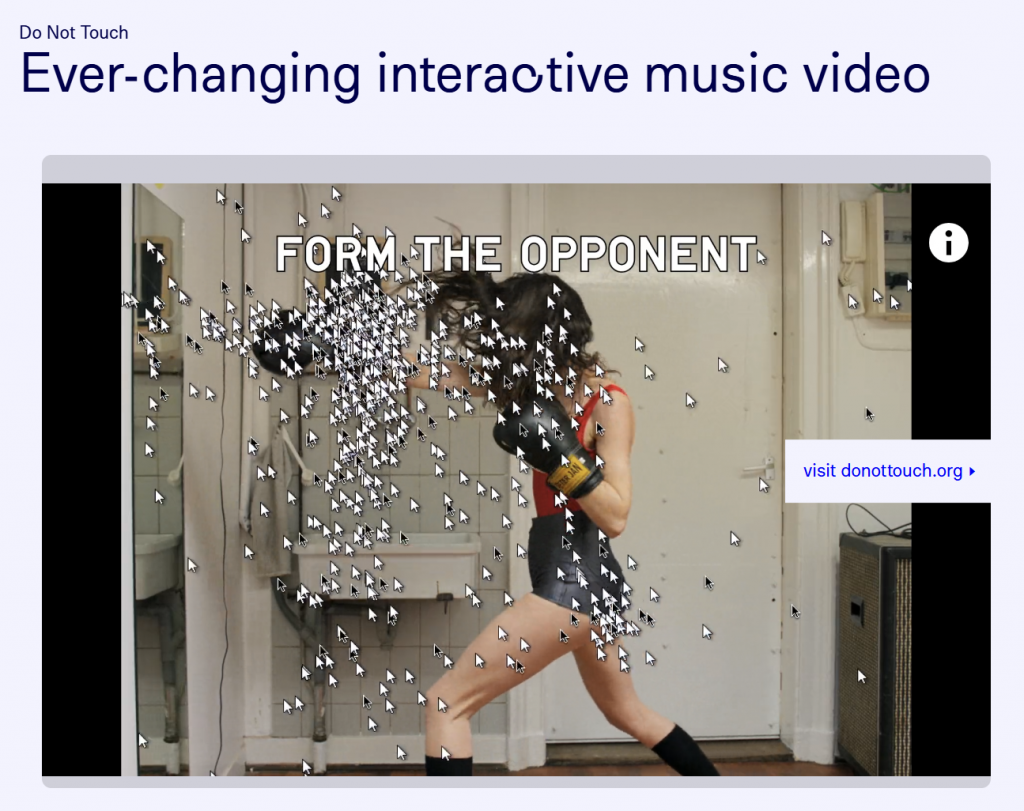
Studio Moniker’s Do Not Touch (2013) is a music video for the band Kyteman. The viewer follows textual prompts using their cursor — tracking objects, performing symbolic gestures. The browser records every viewer’s cursor in real time. As the video plays, the trails of all previous viewers’ cursors are overlaid on the current viewing, visualised as white dots accumulating on screen. By the end, thousands of strangers’ gestures are visible alongside yours.
Do Not Touch proved that participation, scaled across thousands, can produce graphics. But it also showed me what I did not want. Every individual gesture dissolves into the visual mass. No single viewer’s path is traceable. Participation here is parallel, not sequential. The participants do not respond to each other; they accumulate beside each other.
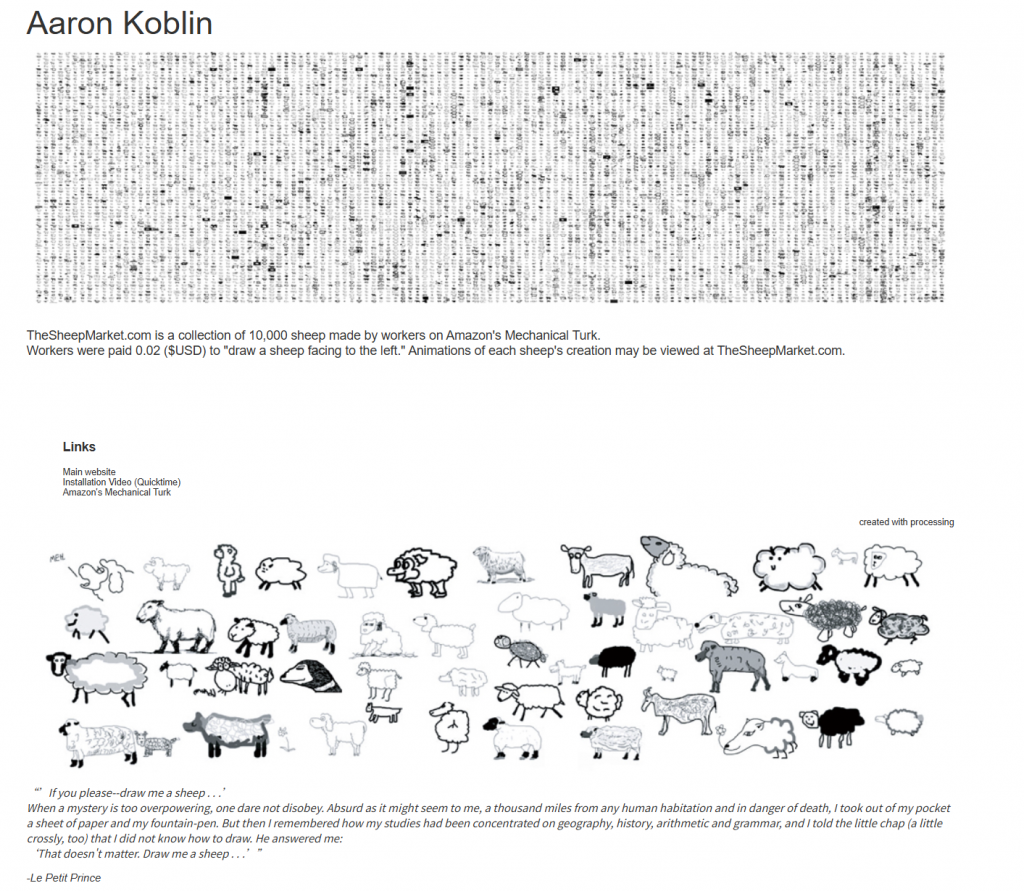
Aaron Koblin’s The Sheep Market (2006) sits at a similar fork. In 2006, Koblin posted a task on Amazon Mechanical Turk: draw a sheep facing left. Payment: two cents per drawing. Within forty days, 7,599 anonymous workers had produced 10,000 sheep. Each drawing is animated to replay its own making — every cursor stroke recorded frame by frame. The final piece is a browsable grid of ten thousand sheep, each clickable.
The Sheep Market (Koblin, 2006) is a rigorous demonstration that a single rule, distributed widely, can produce a rich visual archive. The rule — one sheep, facing left, two cents — is minimal. The variation among the 10,000 results is enormous. But Koblin’s participants never met each other. They worked in parallel — each responding to Koblin’s rule, none responding to the previous worker’s sheep. The Sheep Market is an aggregate of solitudes.
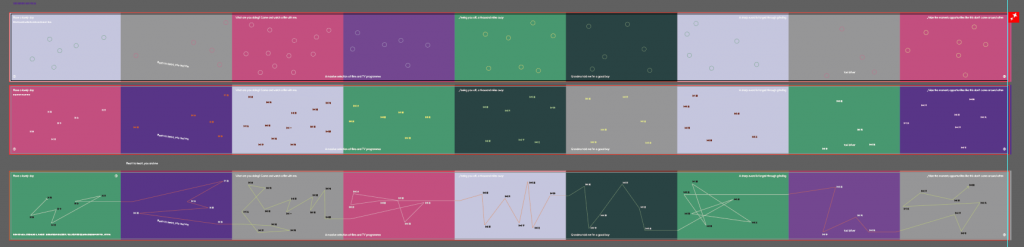
Dot_t. is a shared canvas. Each participant arrives at a state of the canvas already shaped by everyone before them. They see the previous participant’s last word. They write a sentence using that word as their first. They draw a card from a stack of constraint cards (NO CROSSING, ALWAYS LONGER, FURTHEST FIRST). And they draw a line on the canvas — starting where the previous participant’s line ended, following the rule on the card.
The system rests on three decisions.
The first is the unit of translation. In Graphic Maze, the rule translates one body’s behaviour into a graphic. In Dot_t., the rule translates the gap between two bodies’ behaviours into a line. It is no longer the individual gesture. It is the inheritance between gestures.
The second is the visibility of the rules. The constraint cards are not hidden behind the interface. Each participant draws one, sees it, applies it openly. This is in contrast to most contemporary interactive systems, where rules are concealed behind the friction-free surface of “user experience.” In Dot_t., the rule is part of the work.
The third is the persistence of every contribution. No contribution is anonymous. Every line carries the visible trace of the line before it. The chain is a sequence, not a swarm.
The result is an image I could not have specified, and that no participant could have made alone. The chain is the work.

Somewhere between these two systems, authorship quietly moved.
Graphic Maze asks: what happens when the rule itself can be redefined by the participant?
Dot_t. asks: when the rule stays mine, but the process between participants is open and collaborative — how does the image get chained together?
So in Unit 2, what I designed wasn’t the rules. It was the grammar that could hold them.
My enquiry has also evolved. Initially, I asked whether images could generate meaning through behaviour. Now I am asking a different question — where does that meaning come from, and how can it be perceived?
My current answer: meaning doesn’t live inside any single participant. It emerges in the chain of responses between them.
This shifts what my work as a designer must become. It is no longer to design what is seen. It is to design conditions under which a chain of responses can stay open — long enough, slow enough, for strangers who have never met to find each other inside it.
This is what Tim Ingold, in Lines: A Brief History (Ingold, 2007), calls wayfaring — a line that moves not toward a destination, but with the accumulating force of every step before it. The lines in Dot_t. are wayfaring lines. They go forward because someone before them did.
The chain is open. It cannot be finished by me.
Your turn.
References:
Blauvelt, A., Maurer, L., Paulus, E., Puckey, J. and Wouters, R.
(2013) Conditional Design Workbook. Amsterdam: Valiz.
LeWitt, S. (1967) ‘Paragraphs on Conceptual Art’,
Artforum, 5(10), pp. 79–83.
Koblin, A. (2006) The Sheep Market [online interactive project].
Available at: http://www.aaronkoblin.com/work/thesheepmarket/
(Accessed: 31 May 2026).
Studio Moniker (2013) Do Not Touch [interactive music video].
Available at: https://studiomoniker.com/projects/do-not-touch
(Accessed: 31 May 2026).
Ingold, T. (2007) Lines: A Brief History. London: Routledge.