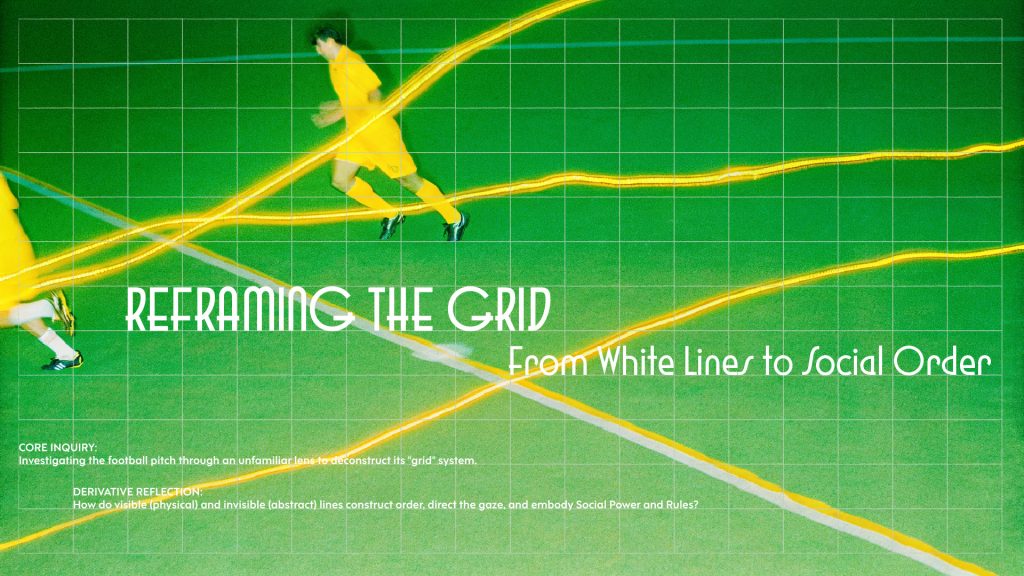
During these three weeks of research, my approach evolved from initial simple observations of the football pitch to later critical reflection.
My initial choice of the football pitch stemmed from a large grassy area near my home where many children played football every weekend. During my observations, I became captivated by the white lines on the pitch, which led me to watch more professional matches and embark on research exploring the relationship between grids and football.
Throughout my investigation, I discovered that the football pitch constitutes a system formed by the interplay of physical, visual, and power grids.
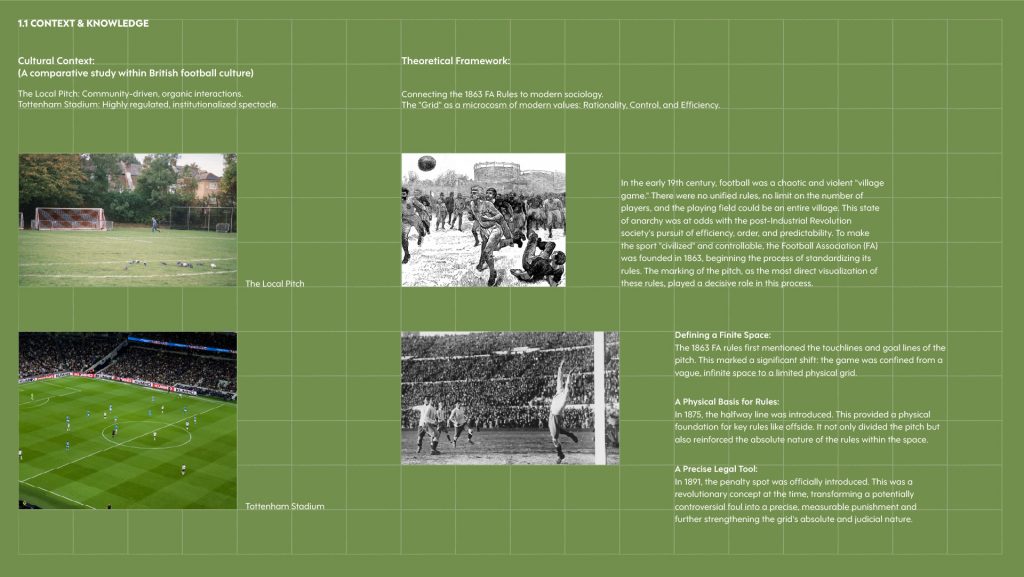
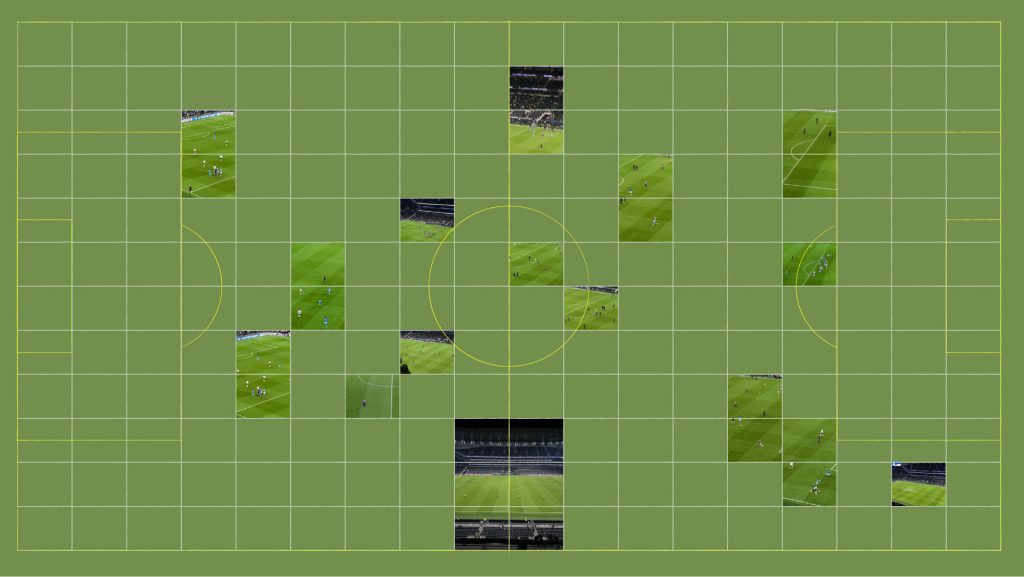
I used a bunch of different research methods, like taking photos, scanning, drawing maps, and making collages. Each week, I tried to build on and refine the methods I’d used the week before. What I found most interesting and inspiring was tracking and drawing the paths of the objects I was focused on.
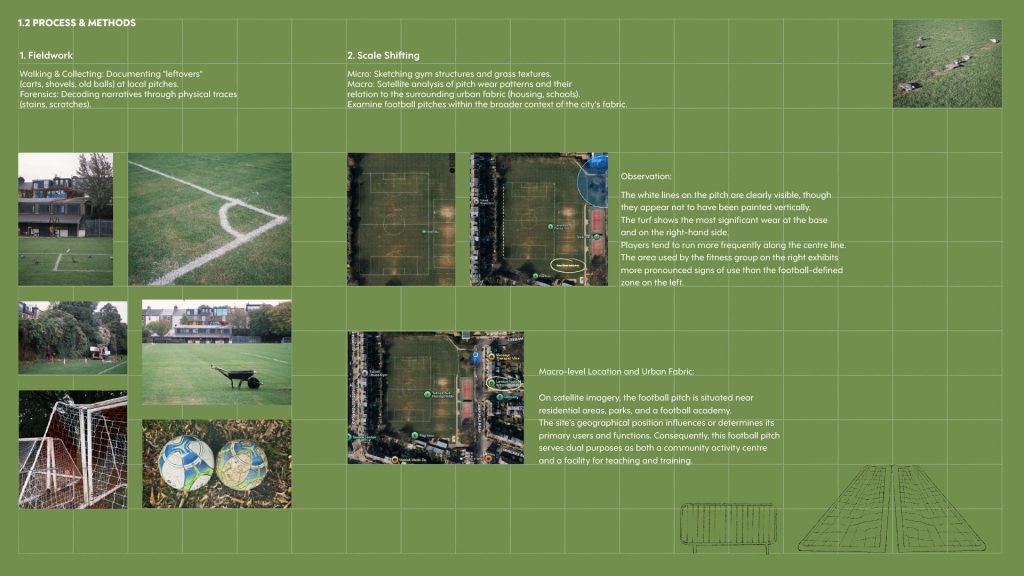
During my research, I initially perceived grids as symbols of power. As visualised rules, grids constrain gameplay whilst also functioning as pervasive social symbols in our lives, defining our behaviours and identities.
During the second week’s match viewing, the football pitch appeared vast while the ball itself seemed diminutive. As the match progressed, my gaze frequently shifted between sharp focus and blurred perception. I became aware of how the pitch’s grid patterns guide the human eye. When squinting, the ball vanished from view, yet the grid remained distinctly visible. Simultaneously, these grid lines effectively tracked the players’ dynamic positions.
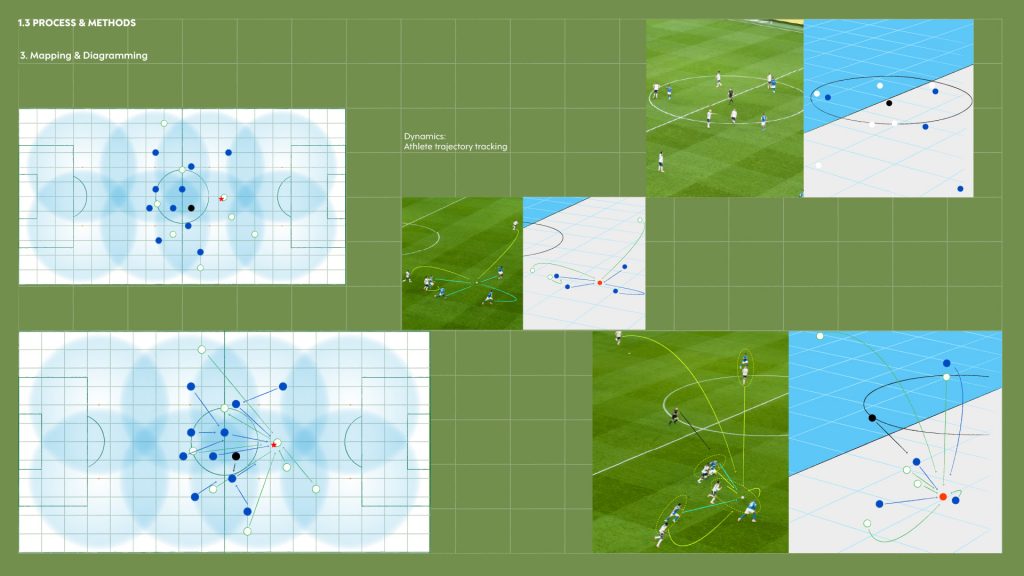
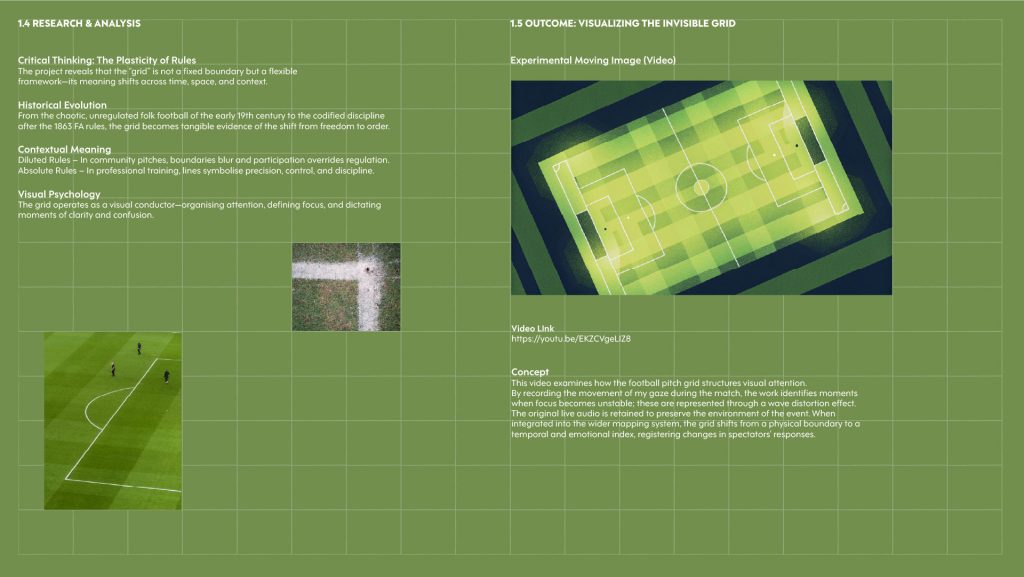
Based on these discoveries, I decided to use a video to express the grid system on the soccer field.
In the video, I show the movement of my eyes during the match and use a wave effect to represent the moments when my focus is lost. I also kept the live audio, and when the dynamic video is embedded in the network, the grid also becomes a tool for locating time and recording the audience’s emotions.
I also looked into the history of how soccer rules were established.
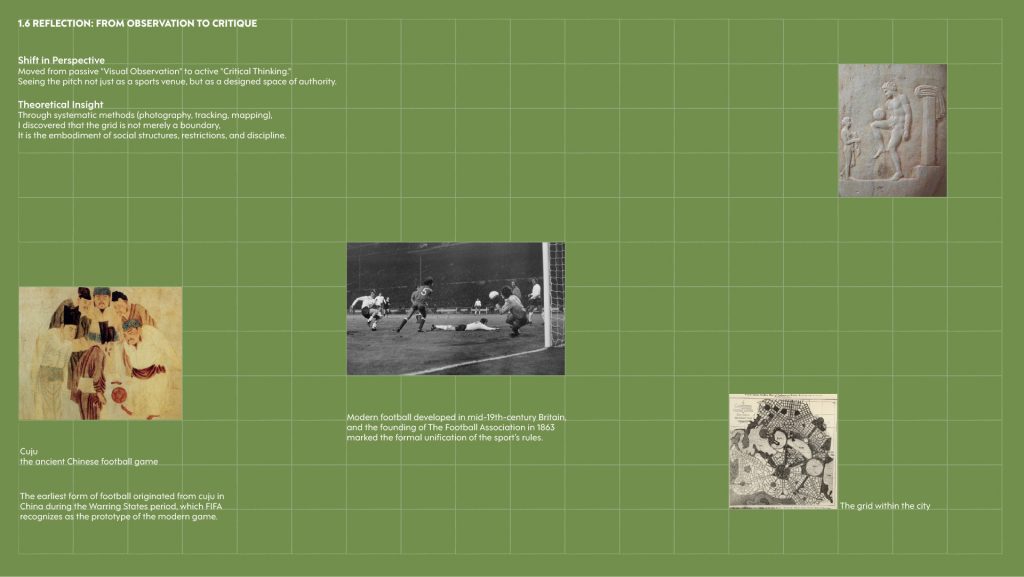
In the early 19th century, football was a chaotic and violent “village game.”There were no unified rules, no limit on the number of players, and the playing field could be an entire village.
To make the sport “civilized” and controllable, the Football Association was founded in 1863, beginning the process of standardizing its rules.
We can find that the grids on the field were created and continually perfected as the physical basis for these rules.
Finally, I expanded my thinking to the grid systems we have in society. The grids on a soccer field aren’t just lines for a game; they’re a microcosm of modern values, symbolizing logic, control, and efficiency. This “grid-like” way of thinking has seeped into every aspect of our lives and shapes the society we live in.
This three-week research project was, for me, an exercise in critical thinking. It forced me to stop taking the everyday football pitch for granted. Instead, I used a designer’s perspective and a systematic visual methodology to deconstruct it in depth. Starting from my initial visual observations, and through photography, mapping, and divergent thinking, I ultimately discovered that the grid is not just a physical boundary; it’s also a tangible representation of rules, boundaries, and discipline.