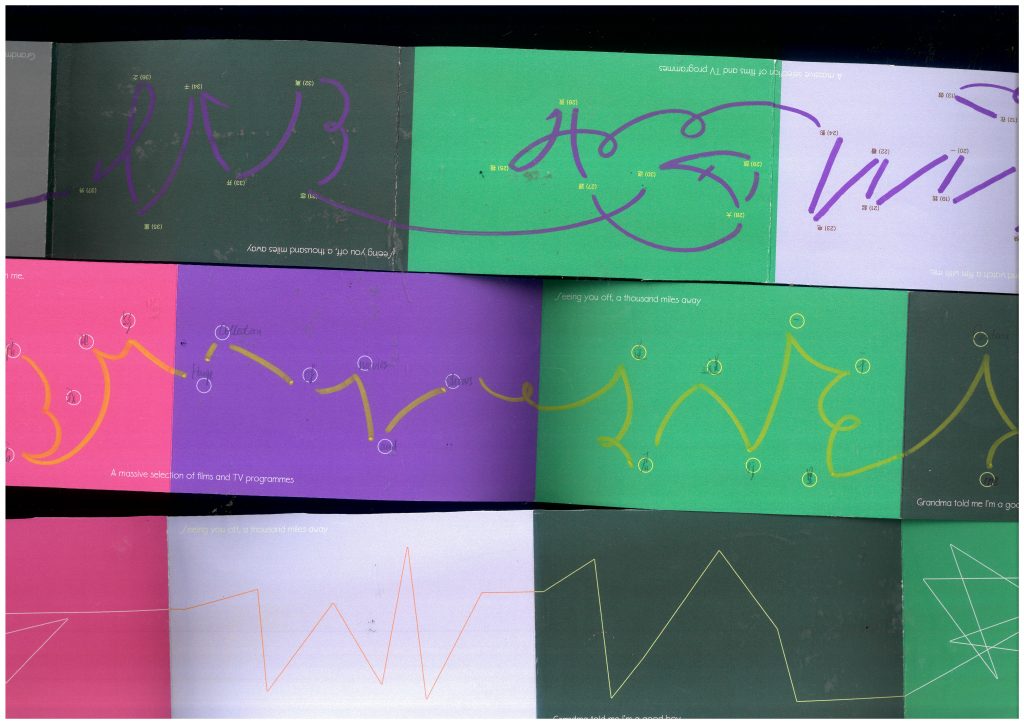
In the unit “Positions through Contextualising,” I built upon the questions raised in the previous unit and conducted research and data collection centered on this issue. During this process, I compiled twelve reference materials—texts, projects, and practices spanning the years 1947 to 2013—each of which affirmed, complicated, or challenged my position. Based on these, I created Dot_t.: a small space designed to examine this question rather than answer it.
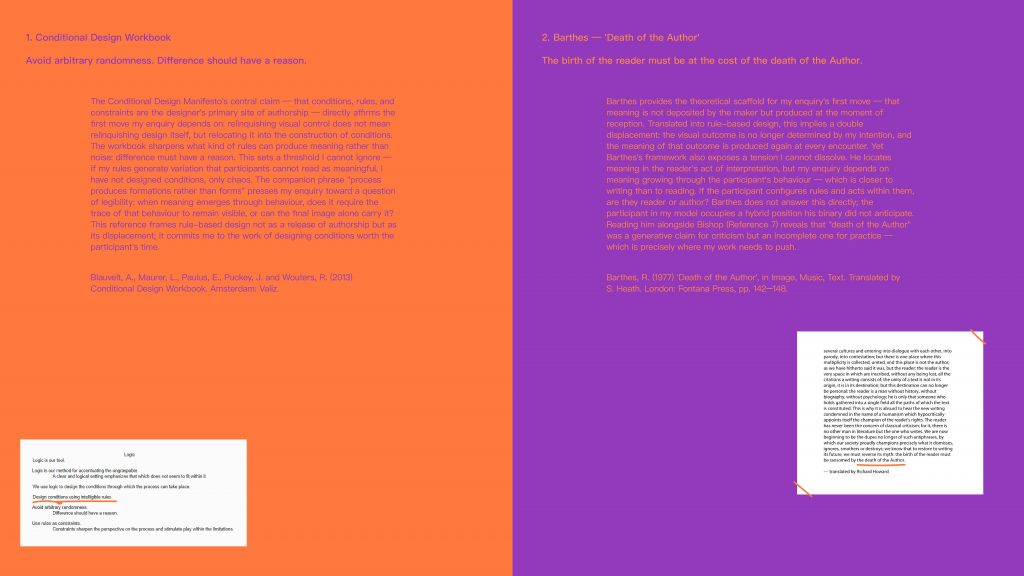
The Conditional Design Workbook, as a working manifesto, tells me this: relinquishing visual control does not mean relinquishing design itself — it means relocating design from the outcome to the conditions. But it also issues a warning: “Difference should have a reason.” If the variation my rules generate is illegible to participants, what I have made is not a set of conditions, but chaos. This single line has become the threshold of my entire experiment.
Barthes argues that meaning is not deposited by the author, but produced by the reader at the moment of reception. This implies a double displacement: the visual outcome is no longer determined by my intention, and the meaning of that outcome is produced anew at every encounter. Yet Barthes locates meaning in the reader’s act of interpretation, while my enquiry depends on meaning growing through the participant’s behaviour — and my participants are not only reading. They are enacting, choosing, leaving traces. They are closer to authors than to readers.
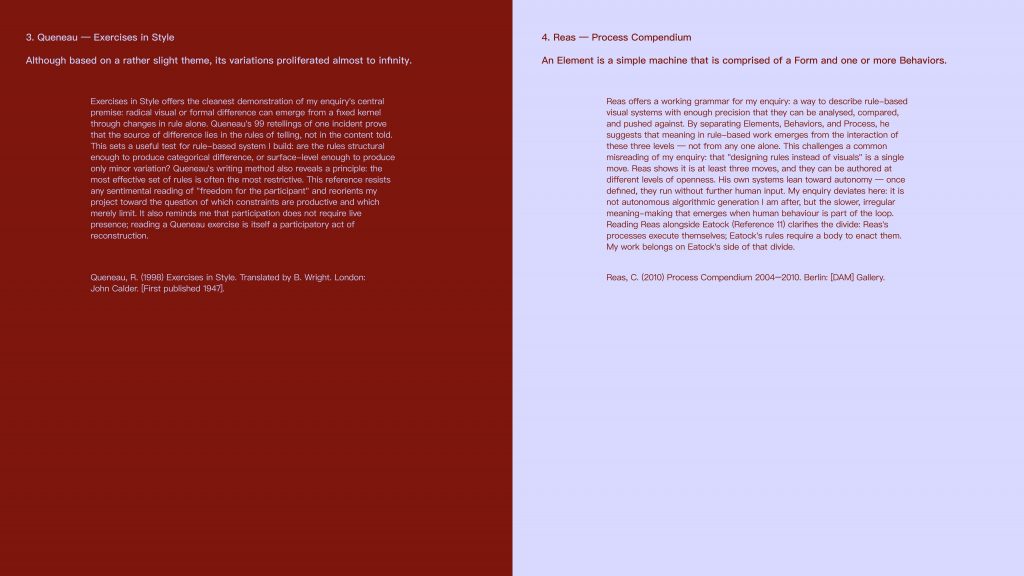
Queneau retells a single trivial bus anecdote ninety-nine times, each under a different rule. This book proves a point my enquiry depends on: the source of difference lies not in the content but in the rules. It also reminds me that the most productive rules are often the most restrictive. This question pushes back against my own experimental design: is it specific enough? Can it produce real difference, or only surface variation?
Reas separates rule-based visual systems into three layers: Element, Behavior, Process. This layering shows me that “using rules instead of visuals” is not one move but at least three, each authorable at a different level of openness. But Reas’s systems run autonomously — once defined, they leave the human behind. My project goes the other way: what I want is the slower, irregular kind of meaning that emerges only when the body remains inside the loop.
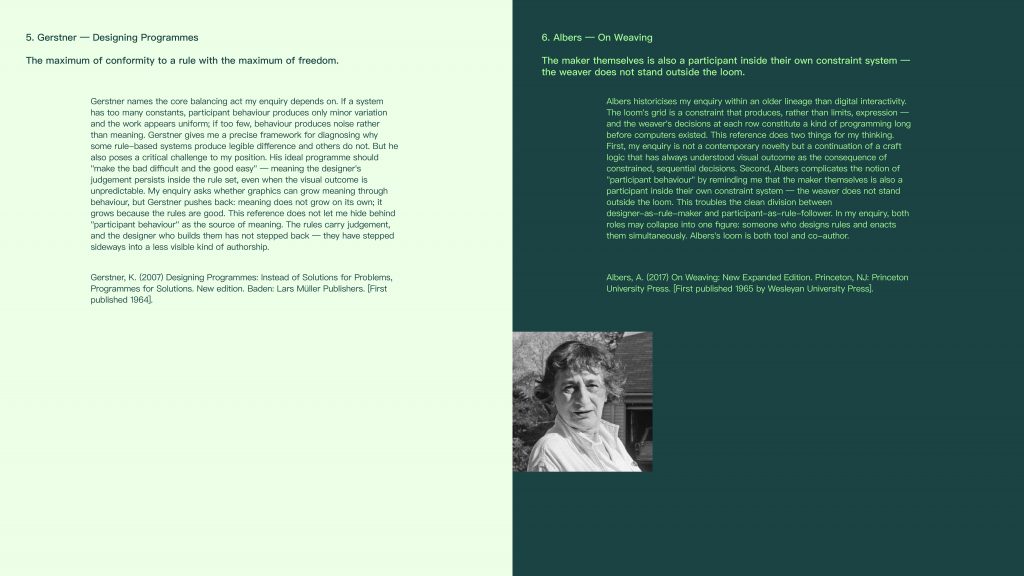
Gerstner observes that if a system contains too many constants, the participant’s behaviour produces only minor variation, and the work appears uniform; if too few, behaviour produces noise rather than meaning. Gerstner gives me a precise framework for diagnosing why some rule-based systems generate legible difference while others do not. The rules carry judgement; the author has not disappeared, only retreated into a less visible position.
Albers connects my enquiry to a tradition older than digital interaction. The grid of the loom, the restriction of warp and weft — she insists that this restriction does not block the emergence of form; it is the very source from which form emerges. This makes me realise: my proposition that “rules constraining behaviour produce graphics” is not a contemporary one. It runs through weaving, printing, and computation alike — a craft logic. Albers gives my project a sense of historical grounding.
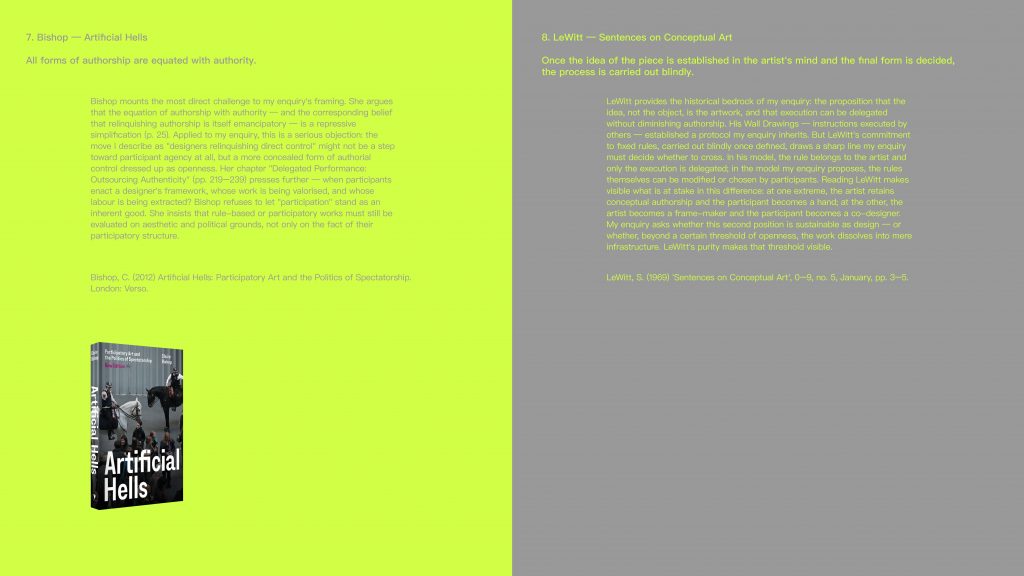
If anyone among these twelve authors stands against me, it is Bishop. In Artificial Hells, she argues that equating “authorship” with “authority” — and then equating “the relinquishing of authorship” with “emancipation” — is a repressive simplification. Translated into my project: what I call “the designer stepping back from control” might not be a form of liberation at all, but only a more concealed form of control. This perspective keeps me from sliding into a self-congratulatory “participation equals freedom.”
LeWitt holds that the essence of an artwork lies in its idea, not its object, and that execution can be delegated to others without diminishing the artist’s authorship. In LeWitt’s model, the rule belongs to the artist and only the execution is delegated; in the model my enquiry proposes, the rules themselves can be modified or chosen by participants. At one extreme, the artist retains conceptual authorship and the participant becomes a hand; at the other, the artist becomes a frame-maker and the participant becomes a co-designer. My enquiry sets out to examine whether this second position is sustainable as a form of design.
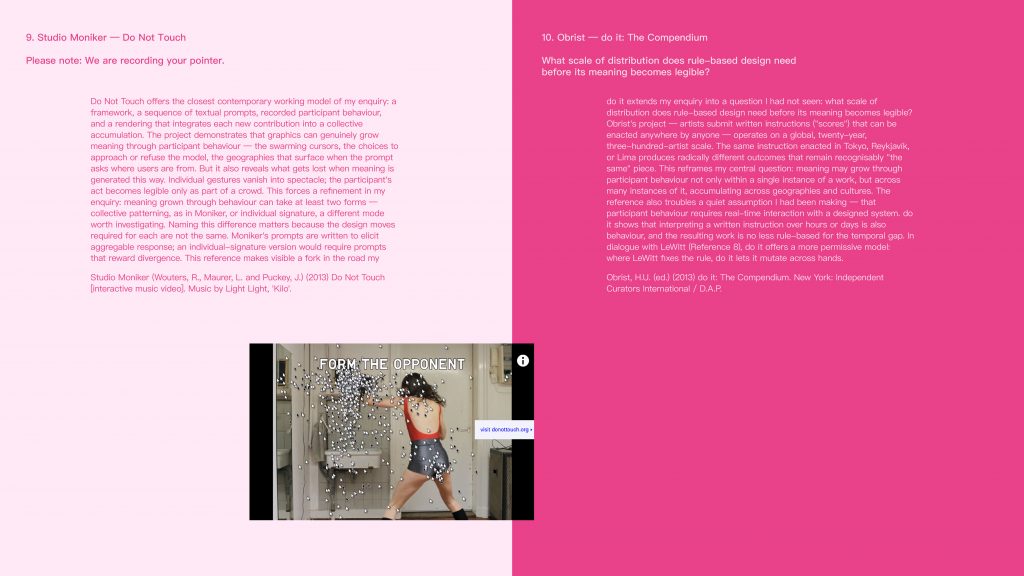
Of all twelve references, no project sits closer to Dot_t. in structure than Studio Moniker’s Do Not Touch. A framework, textual prompts, recorded cursor behaviour, accumulated into a collective image — it did, twelve years before me, what I am attempting now. But it also shows me what I do not want: in Do Not Touch, every individual trace dissolves into a sea of cursors, and participation becomes spectacle. This in turn defines the direction of my own project — I want to preserve individual rhythm, not dissolve it into the collective. Do Not Touch is my sibling project, but also my reverse coordinate.
Obrist’s do it shows me a scale I had not been thinking about — what happens when the same instruction is enacted around the world, by different people, over twenty years. This extends my project from “meaning within a single session” to “meaning accumulating across geographies and time.” It also corrects a quiet assumption I had been making — that “participant behaviour” must occur in real-time interaction. Obrist tells me that interpreting a written instruction is itself behaviour.
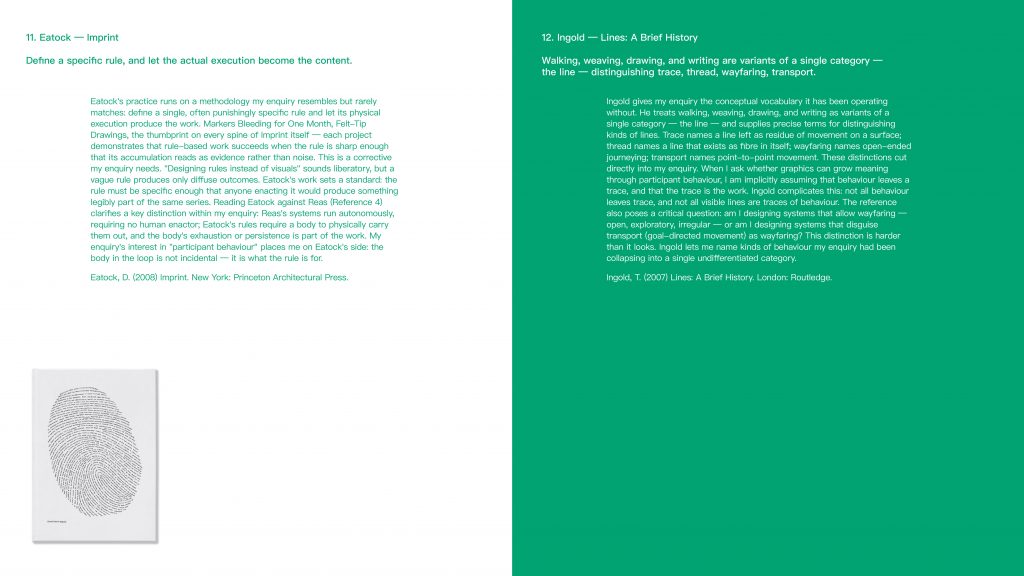
Eatock’s project method is extremely simple — one rule, run to its physical end. One pen, drawn until empty; the spines of all four thousand copies of Imprint, thumbprinted by hand. Eatock makes one thing visible: rule-based work succeeds because the rule is sharp enough. Vague rules produce only diffuse outcomes.
Ingold provides my enquiry with the conceptual vocabulary it had been operating without. He treats walking, weaving, drawing, and writing as variants of a single category — the line — and supplies precise terms for distinguishing different kinds of lines. When I ask whether graphics can grow meaning through participants’ behaviour, I am implicitly assuming that behaviour leaves a trace, and that the trace itself is the work. Ingold complicates this: not all behaviour leaves a trace, and not all visible lines are traces of behaviour. His writing also poses a critical question: am I designing systems that allow wayfaring — open, exploratory, irregular — or systems that disguise transport (goal-directed movement) as wayfaring?
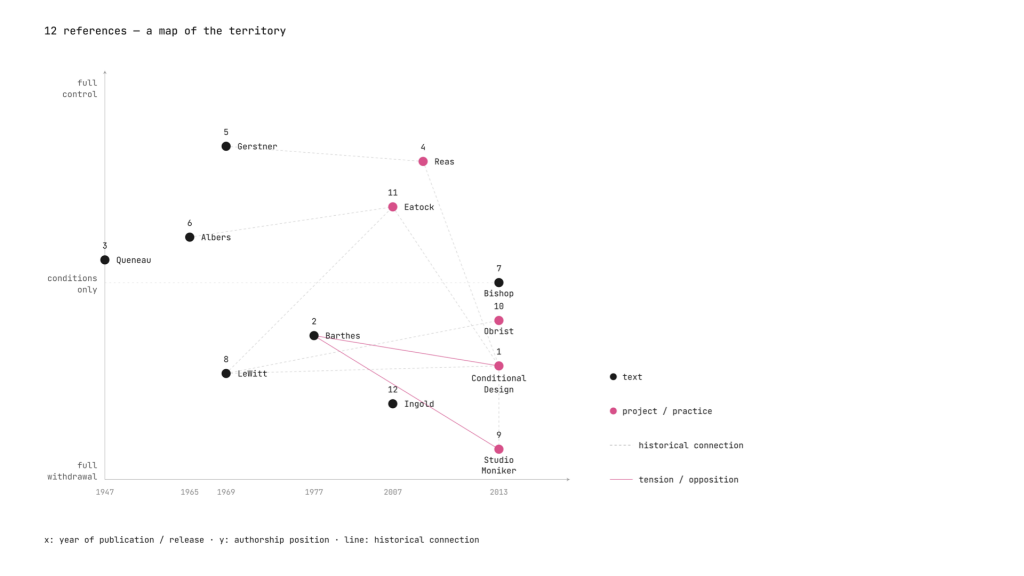
In this map, I have charted the contexts and networks surrounding the twelve references. The horizontal axis is time, from 1947 to 2013; the vertical axis marks authorship position — full visual control at the top, full withdrawal at the bottom. Each node is one reference: black for texts, red for projects or practices. The grey dashed lines connect historical citations, lineages of teaching, or shared authorship — Studio Moniker shares three authors with Conditional Design; Reas explicitly pays tribute to LeWitt in his work; Gerstner inherits Albers’s thinking about the grid. The two red solid lines mark the only direct critical relations — Bishop’s opposition, in Artificial Hells, to the participatory tradition that Conditional Design and Obrist both belong to. This map is not a catalogue of twelve references, but a record of more than sixty years of conversation among them. It tells me: when I propose that “the designer can step back from visual control,” I am not opening up new territory — I am walking into a field already walked, contested, and entangled by others.
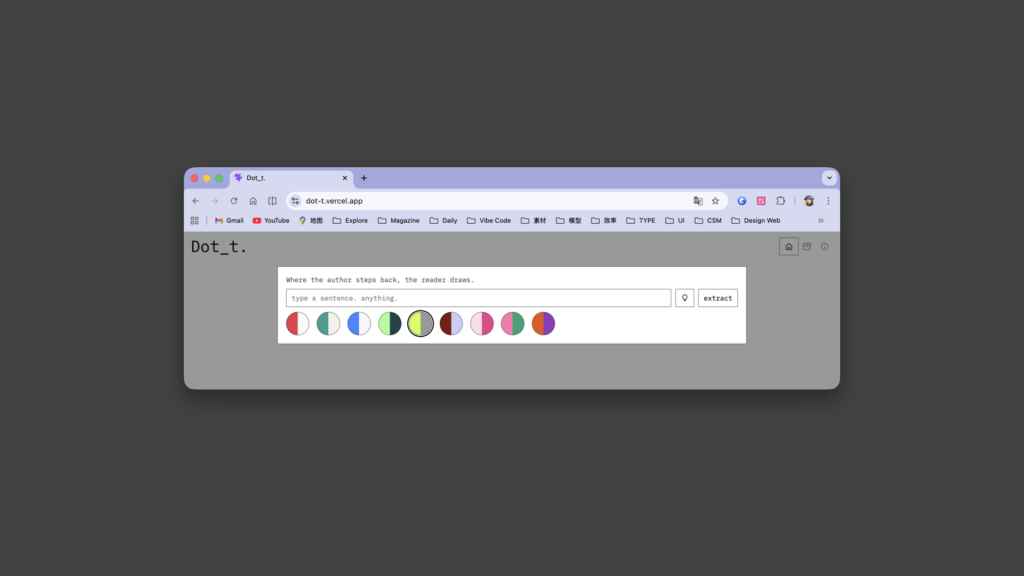
Based on the information above, I have created a website as my response. Dot_t. is a web-based interactive experiment that transforms discourse into a game of connections. The system extracts words from participants’ inputs or randomly selects them from the perspectives of the twelve authors who influenced this project—ultimately scattering each word as a dot across the canvas.
Before drawing begins, the participant faces a choice. They can pull a constraint card from a deck of fifteen — distributed across three families: geometry, rhythm, and relation — and let it govern the round. Or they can hold the freedom of drawing in their own hands, connecting the points however they wish. As for the mode of connection? The participant can preserve the tremor of a hand-drawn line, or choose the clean geometry of a system-snapped one. Every action is recorded — every pause, every acceleration, every hesitation — and stored in the archive as a replayable video alongside the finished image.
The project asks: when the designer steps back from the visual outcome and instead designs the conditions of participation — the extraction logic, the constraint deck, the modes of engagement — how exactly does meaning grow from the participant’s behaviour in the figure that emerges? Where shape and meaning intertwine, every connection becomes the participant’s answer.
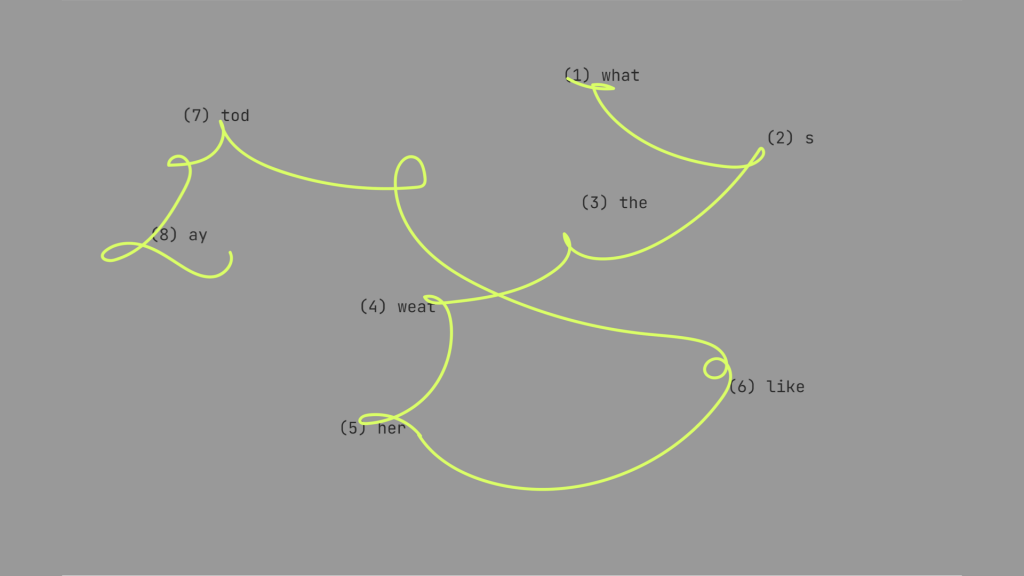
Whilst building it, I realised something: whenever I tried to make Dot_t. appear more ‘neutral’, the author’s identity became more obscure rather than clearer.
I made the constraint cards optional — but I had written what was on the cards. I added a random-connection mode — but I had designed how the “random” worked. I let every word become a point, treating substantive and function words equally — but that decision, too, was still mine. I offered two modes, manual and straight — but the very pairing already suggested that the tremor of a human hand and the cleanness of a machine line sit in a tension the participant ought to notice.
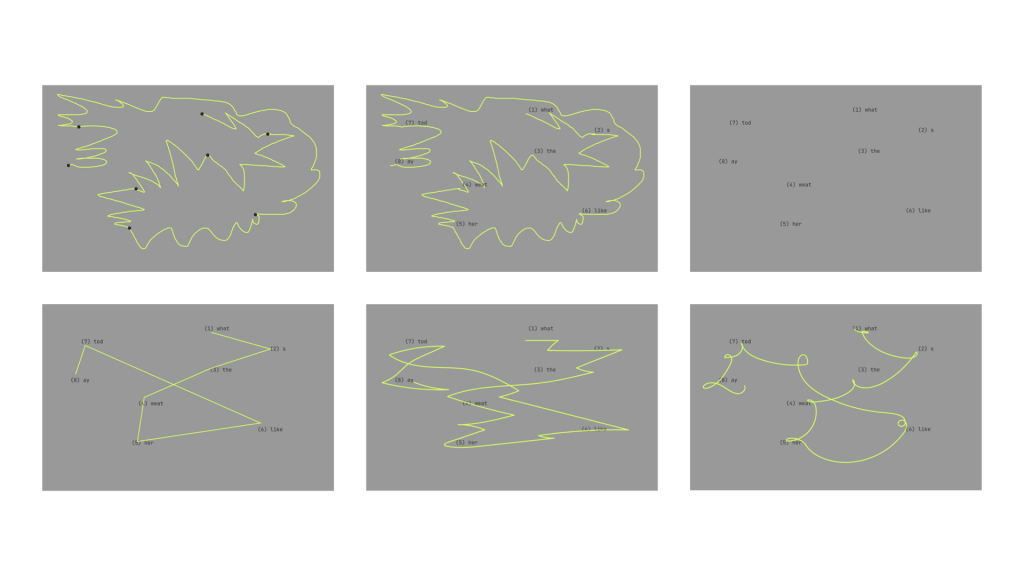
I thought I was making room. But every act of making room was accompanied by a deeper kind of intervention. In Artificial Hells, Bishop observes that “all forms of authorship are equated with authority.” At first I read her remark as a critique of participatory art. This week, I began to read it as a note addressed to me.
And yet this does not discourage me. I think I am beginning to understand — the honesty of participatory design lies not in erasing authorship, but in placing it on the table, letting it be seen, letting it be questioned. Dot_t. does not yet do all of that. What it does, is let me — for the first time — really see my own hand, hidden behind every layer of the system I have made.
That is everything this week has given me. A question more complex, and more honest, than the one I started with.
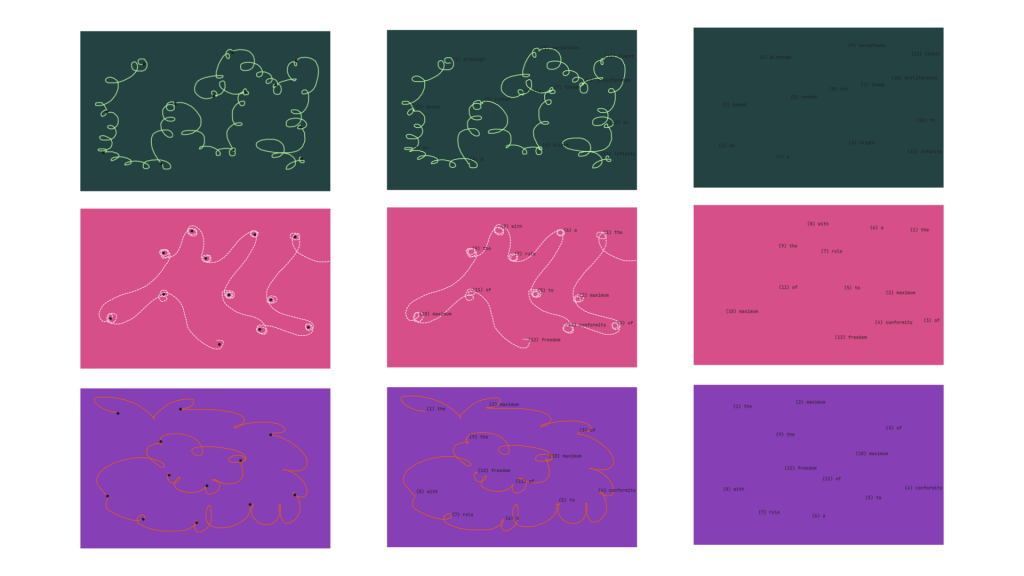
During the second week, I conducted more in-depth project research focused on the keywords “network” and “ownership,” continuing my exploration of the previous topics.
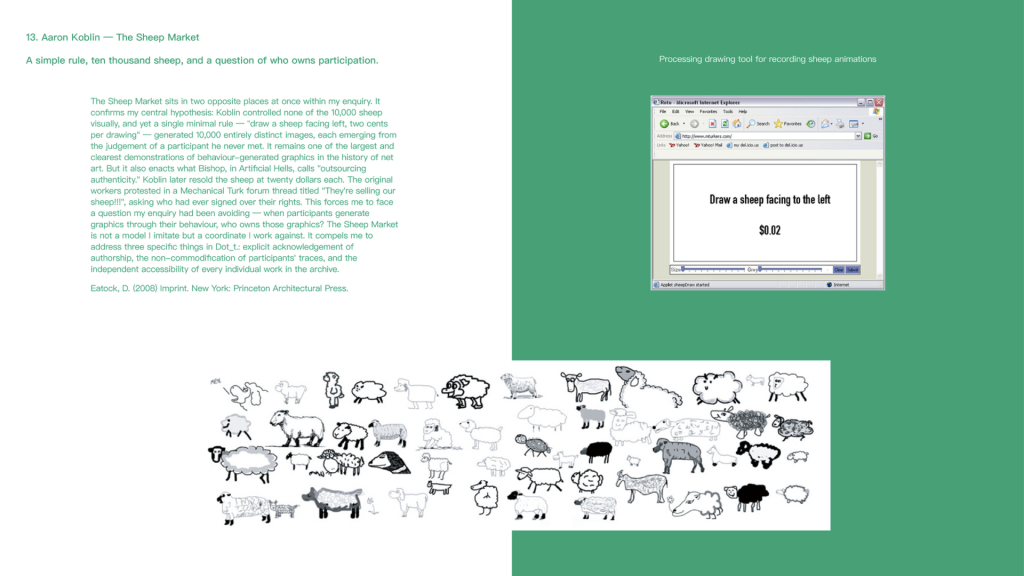
The name of the first Reference items is The Sheep Market
In 2006, Aaron Koblin posted a task on Amazon Mechanical Turk, a crowdsourced labour platform: draw a sheep facing left, two cents per drawing. Within 40 days, 7,599 anonymous workers submitted 10,000 sheep. Koblin compiled them into a single grid-website where hovering over any sheep replays the act of its drawing.
The work was followed by an ethical incident — Koblin later sold the 10,000 sheep at twenty dollars each. When the original workers learned of this, they protested in a Mechanical Turk forum thread titled “They’re selling our sheep!!!”, questioning ownership, copyright, and the ethics of the project.
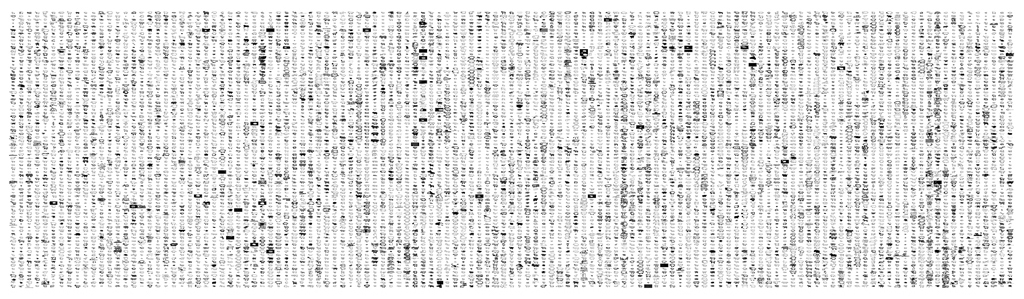
It acts on my research question in two opposite directions at once.
It confirms my hypothesis. Koblin controlled none of the 10,000 sheep visually. He designed only a single minimal rule, and 10,000 distinct graphics emerged purely from participants’ behaviour — one sentence translated into ten thousand visual variants. The simpler the rule, the more visible the difference in behaviour.
It also complicates my hypothesis. It is a literal case of what Bishop warns against in Artificial Hells — “outsourcing authenticity.” The labour of participants is absorbed into Koblin’s signature; the work is then resold at one thousand times its production cost. Participation here is not emancipation but an unequal economic exchange.
My enquiry assumes that meaning can grow through participants’ behaviour. The Sheep Market shows me that this is indeed possible — but the way in which it becomes possible may be dangerous. It forces me to re-examine Dot_t.: when users leave behavioural traces on my website, who owns those traces? When the archive grows into a large visual database, does it belong to me as system designer, or to the participants who generated it?
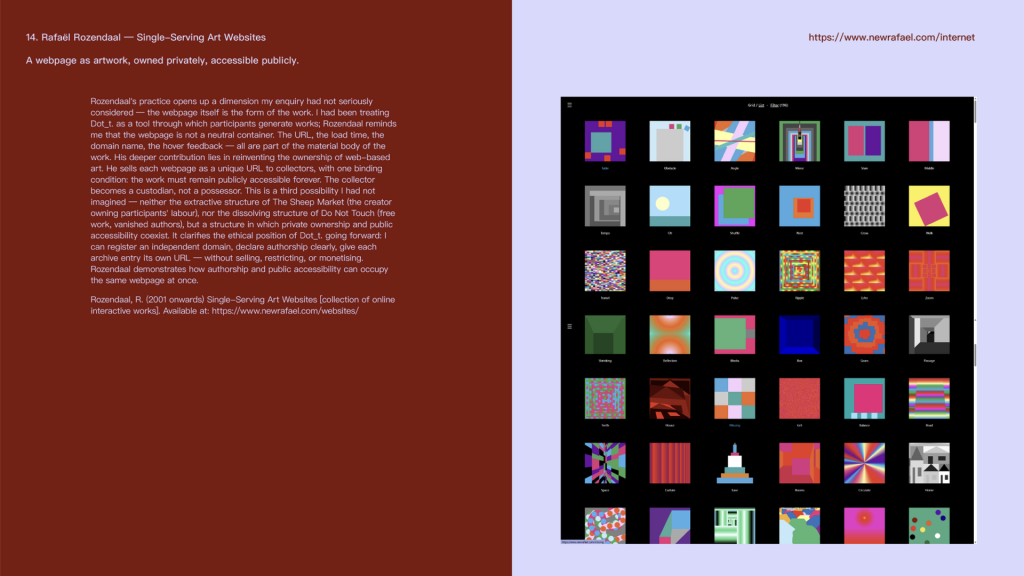
The second project is by Rafaël Rozendaal, a Dutch-Brazilian artist. Since 2001, he has been doing something unusual — treating a webpage itself as an artwork.
Each of his works is a standalone website, and each website does just one simple thing. Color Flip (2008): you open the page, see a block of colour, hover your cursor near a corner, and the block folds like a page being turned, revealing another colour underneath — that one interaction, nothing else. Falling Falling (2011): open the page, and coloured stripes fall endlessly downward, no beginning, no end.

Every work has its own independent .com domain — the URL is the title. Type the address, and the work begins. There are no menus, no onboarding, no “about” page.He does another unusual thing — he sells these webpages as artworks to collectors. A collector might pay several thousand dollars to own a URL, and from then on the domain belongs to them. But there is one rule: the work must remain publicly accessible forever. Anyone in the world can still type the address into a browser and open it for free. What the collector owns is not exclusivity, but a kind of guardianship — they become the work’s custodian on the internet, not its possessor.
Rozendaal’s creative practice demonstrates that a web page itself can be a form of artwork. I had previously regarded Dot_t. as a tool for participants to generate works; this project reminded me that a web page is not a neutral container, and that authorship and public access can coexist within the same page.
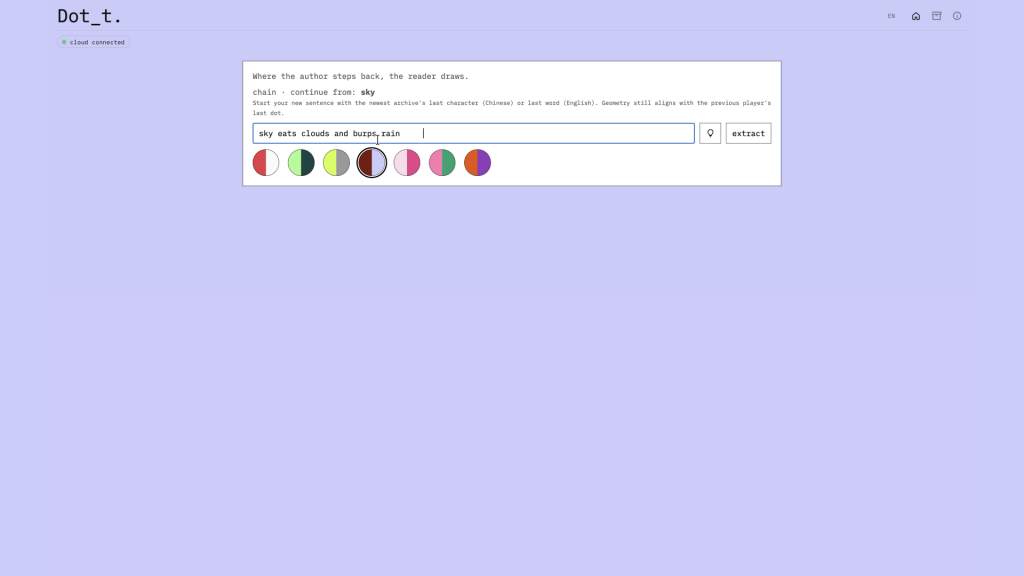
In the second week, the website I designed, Dot_t., has also developed new capabilities. It can now be used simultaneously on multiple devices and offers both Chinese and English versions, allowing participants from different linguistic backgrounds to engage with it. It has also introduced a new feature: word chain.
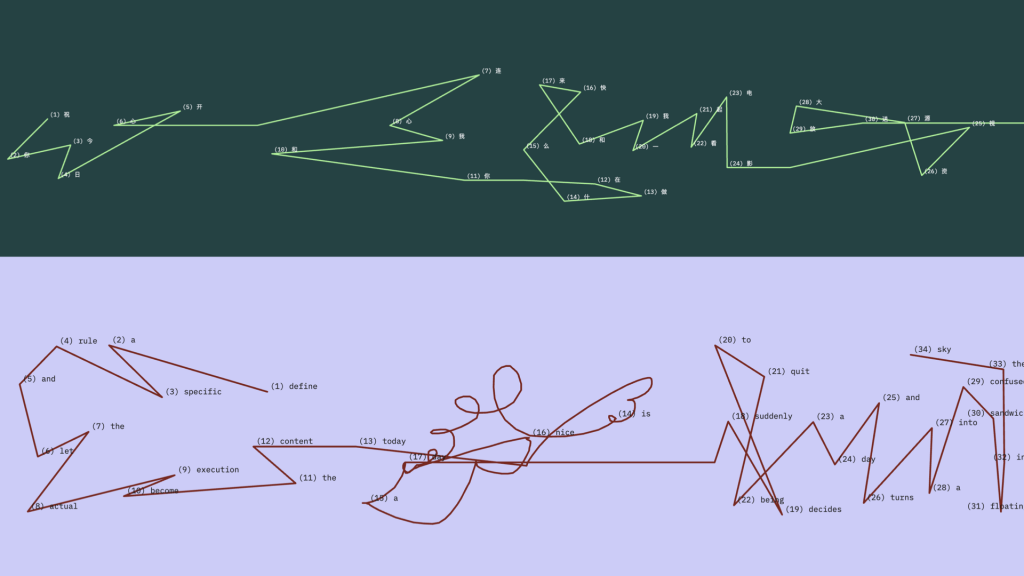
When a participant finishes their sentence and draws their line, the next participant starts with a word from the previous sentence and constructs their own new sentence, creating new dots and forming new connections.
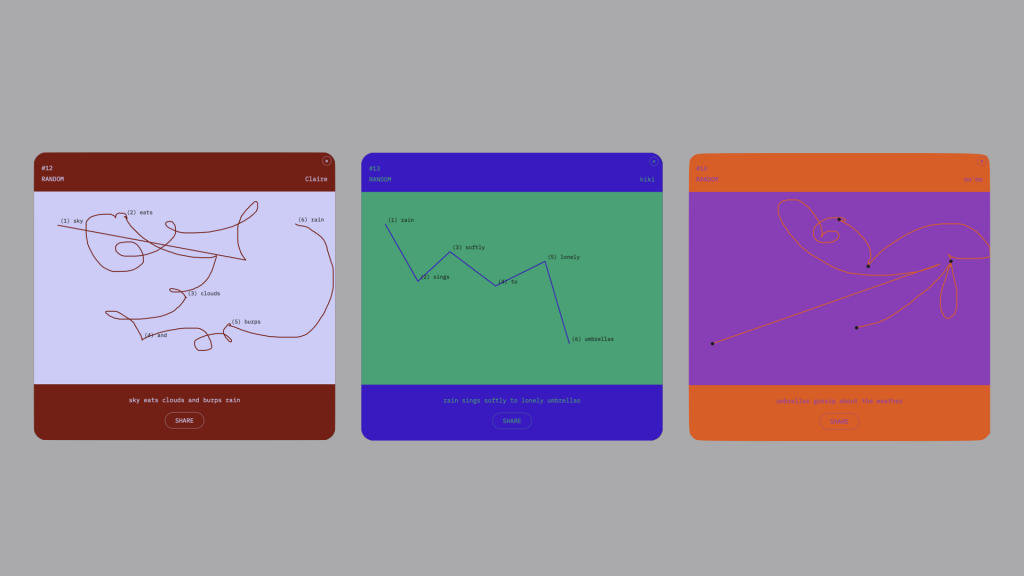
A sentence circulates among many hands. A line grows across many hands. Dot_t. is no longer a solitary canvas in front of one person — it is becoming a place that grows between people. As creators, users can share their process after completing the sentence-matching activity.The cards will display their names, the rules of the game, and the sentences they have entered.
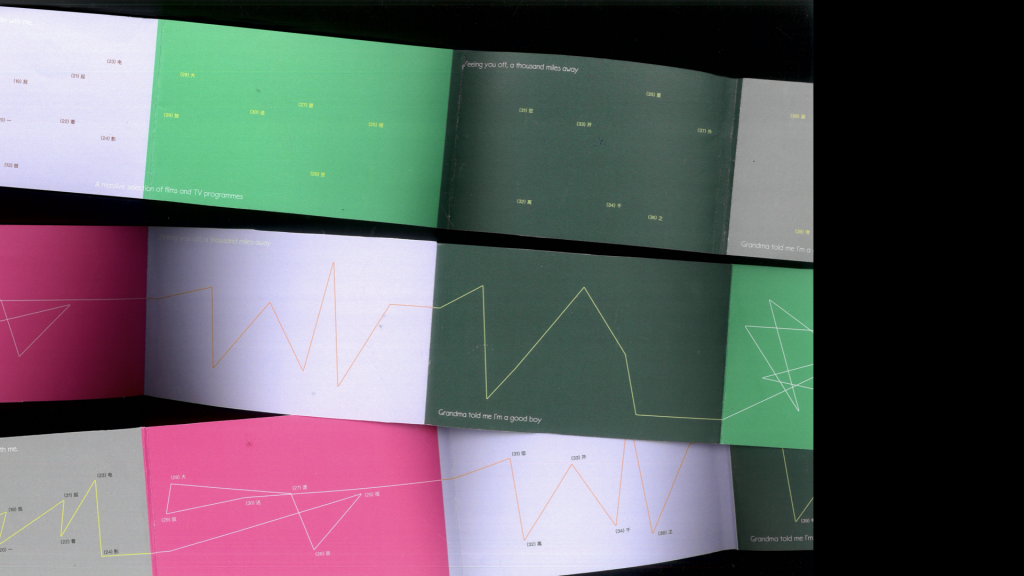
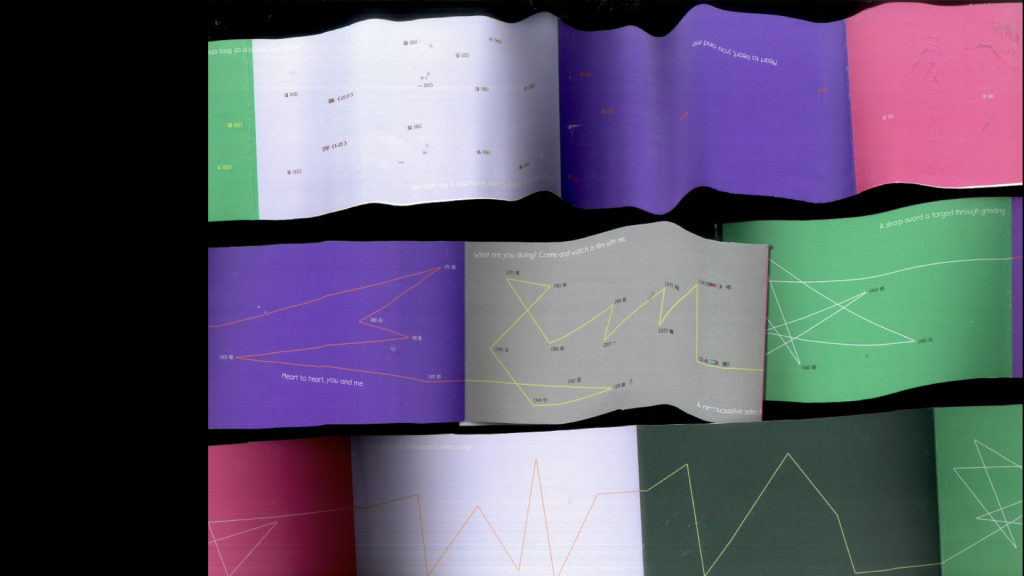
In the third week, I shifted the online collaborative mode to an in-person setting. By preserving the participants’ handwriting, hesitations, and spelling mistakes, I allowed them to engage more authentically in the process of creating the graphic.
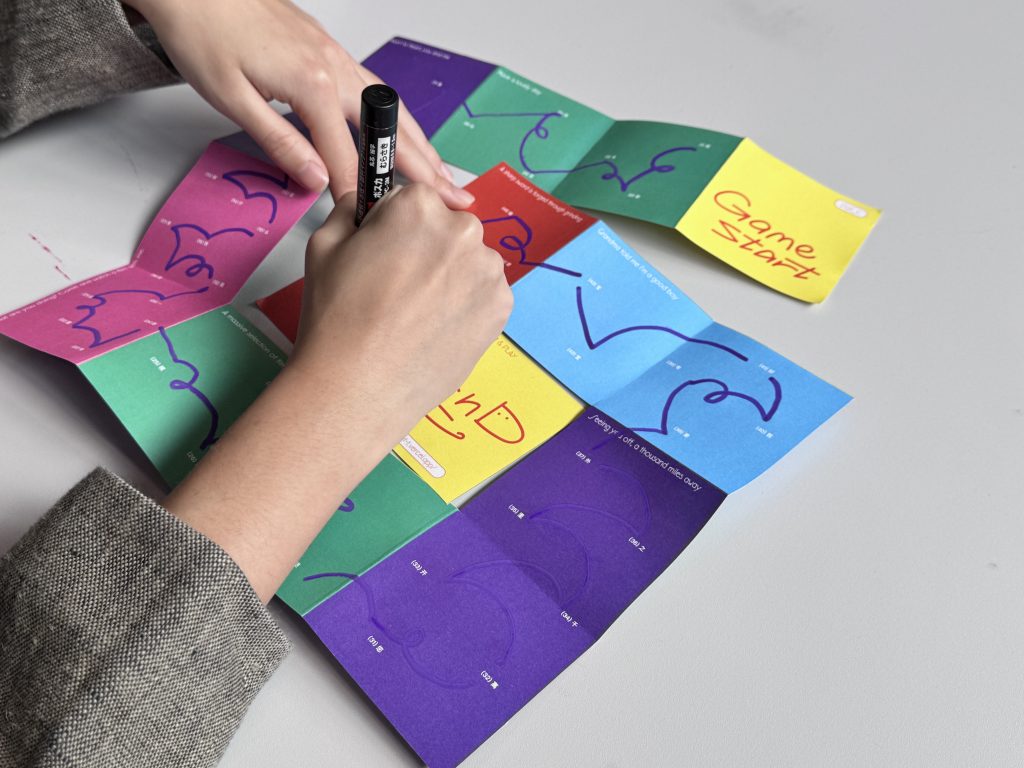
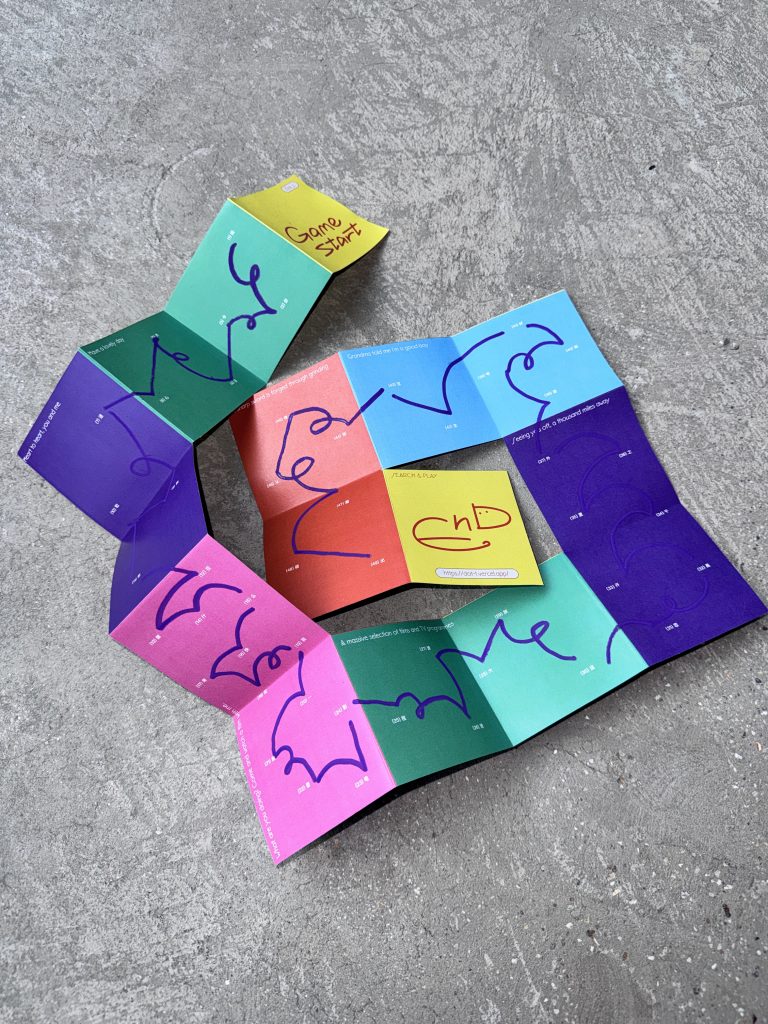
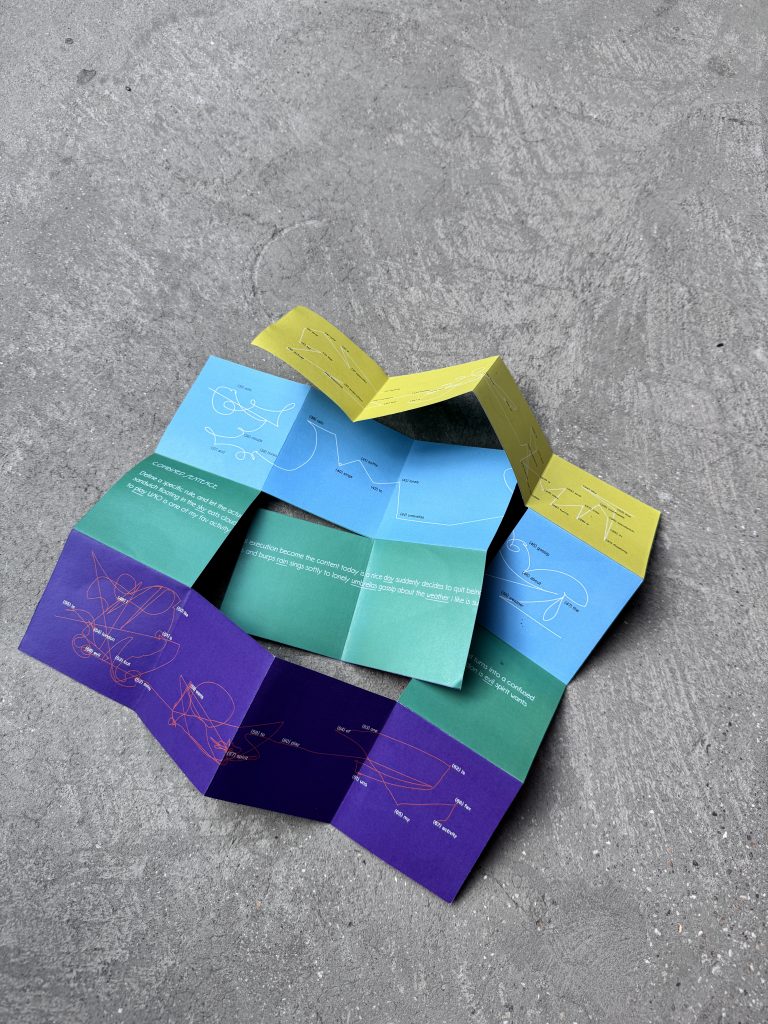
My initial question was this: when a designer relinquishes direct control over the visual outcome and instead designs a set of rules and structures, can the graphic generate meaning through the participants’ actions? Over the course of these three weeks, this question has evolved to a new perspective—meaning does not arise from the actions of any single participant; rather, it emerges between participants: in the moment when one person’s words are picked up by another, or when the line one person ends allows the next to begin their stroke. Dot_t. is not the answer to this proposition; it is the site where this proposition is continually tested. The screen hosts one form of it, and the paper hosts another. Between these two forms, the research itself is growing.