This analysis employs a metadata-reading method to compare selected passages from Benedict Anderson’s Imagined Communities with Shannon Mattern’s essay “Library as Infrastructure.” By juxtaposing Anderson’s account of the colonial census, map, and museum with Mattern’s discussion of library classification, platform metaphors, and infrastructural invisibilities, the paper demonstrates how systematic classification operates as a political and epistemic infrastructure that renders certain phenomena legible while obscuring others.
Metadata framing
This meta-analysis treats classification systems as infrastructures: structured, repeatable, and materially instantiated practices that organize people, places and things into discrete, administrable units. The method reads texts for (a) the instrument or medium of classification, (b) the historical origins and time frame, (c) the unit of classification, (d) the implicit ideological purpose, and (e) paradoxical or emergent consequences. This schematic permits a comparative reading of Anderson’s “Census, Map, Museum” and Mattern’s account of library infrastructures.
| Metadata Category | Information Type | Analysis & Commentary (Connecting the Texts) |
| Core Instrument/Medium | Explicit / Type | Anderson highlights the colonial administrative triad — census, map and museum — as instruments by which colonial states produced legible populations and territories (Anderson, 2006, pp.186–190). Mattern foregrounds parallel tools in knowledge institutions: classification schemes such as Dewey, library cataloging infrastructures, and the contemporary “platform” metaphor that reinscribes epistemic ordering in digital form (Mattern, 2014, ‘Library as Platform’ section). |
| System Origin & Timeframe | Explicit / Date | Both authors locate the emergence of mass classificatory regimes in the long nineteenth century. Anderson shows how colonial bureaucracies developed census practices and modern cartography that enabled states to “count” and territorialize populations (Anderson, 2006, pp.188–196). Mattern traces the institutionalization of library systems and the commercialization/standardization of classification across the late nineteenth and twentieth centuries (Mattern, 2014). |
| Unit of Classification | Explicit / Type | In Anderson’s account a complex set of lived identities is compressed into discrete census categories — the colonial state’s “one-place-for-each-person” fiction — which solidify fluid social relations into enumerated types (Anderson, 2006, pp.193–199). Mattern shows a similar process in libraries, where subjects, formats and metadata fields reduce heterogeneous materials and experiences into standardized units amenable to retrieval, reuse, and commercial layering (Mattern, 2014). |
| Implicit Purpose/Ideology | Implicit / Interpretive | Both classificatory systems enact implicit ideologies. Anderson demonstrates a political logic: the census and the map make populations legible to governance and legitimation (Anderson, 2006, pp.200–205). Mattern diagnoses an epistemological–economic logic: the language of classification and the rise of the “platform” metaphor channel institutional priorities such as efficiency, scalability, and monetization, shaping what forms of knowledge are produced and circulated (Mattern, 2014, “Library as Platform” section). |
| Paradoxical Consequence | Implicit / Interpretive | Both texts document ironic outcomes. Anderson shows that instruments of colonial legibility (maps, censuses, museums) were later reappropriated as emblems of anti-colonial nationalism (Anderson, 2006, pp.206–209). Mattern warns that the “platform” frame risks rendering infrastructure invisible — obscuring labor, governance and commercial logic under a rhetoric of openness (Mattern, 2014). |
Conclusion
Ultimately, classification is not a neutral act. Both colonial administrative grids and library systems are powerful, mutually reinforcing infrastructures. They actively define what becomes visible (the explicitly classified) and what remains hidden (the implicitly structured), shaping both state power and public knowledge.
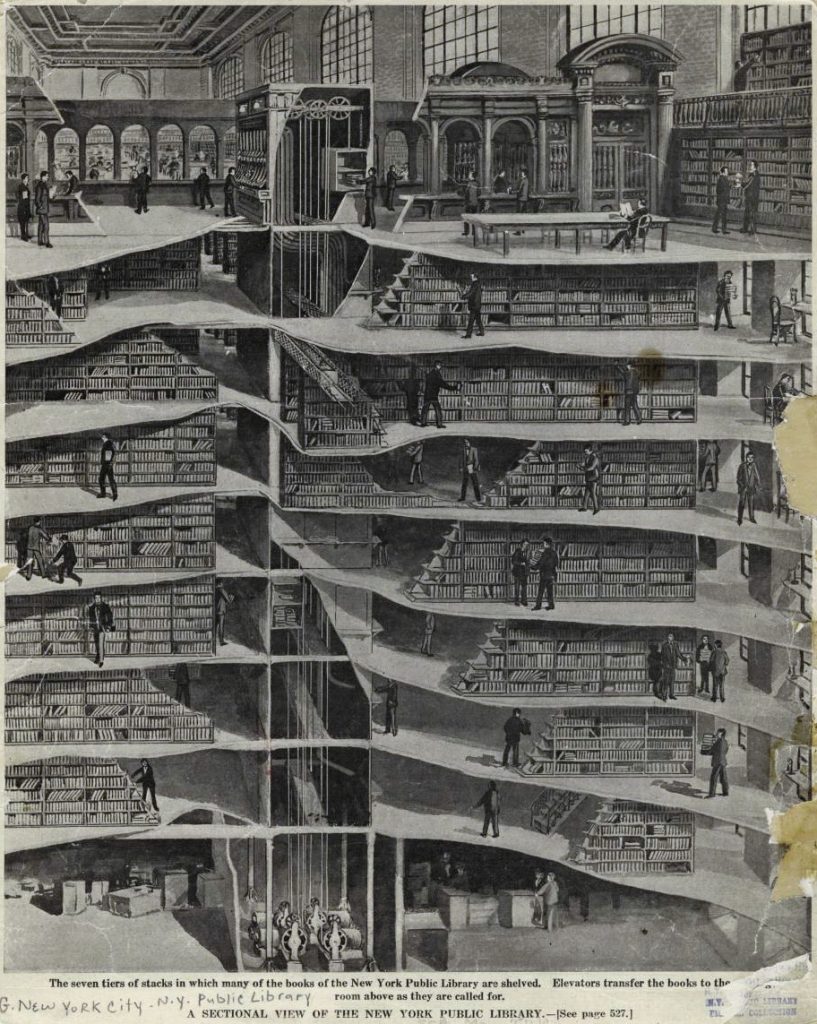
Benedict Anderson, ‘Census, Map, Museum’, Imagined Communities, 2006 Shannon Mattern, ‘Library as Infrastructure’, Places Journal, June 2014